How to read the Celtic Cross
The Celtic Cross is the largest spread in tarot: ten cards laid out as a cross, with a line of four more cards standing beside the cross. You use the Celtic Cross when one situation needs more than a quick answer — a decision at work you keep circling, a relationship that has grown complicated, a change you can feel coming before you can see the shape of the change.
Ten cards can look like a lot to take in. Read in order, the ten cards tell one connected story: where you are, what is in your way, where the situation came from, and where your choices are taking the situation. This page walks through the spread the way the reading itself does — position by position, in plain language.
What the Celtic Cross is, and when to use it
The Celtic Cross is a ten-card spread built around one situation. You bring one question, or one part of your life — a job decision, a move, a relationship — and each of the ten cards speaks from a different position in the spread. One card shows where you stand. Another shows what is pushing against you. Others look back at what led to the situation, and forward at what is coming next.
Use the Celtic Cross when a situation has layers. A single card can name the heart of a day. A three-card spread can show a beginning, a middle, and an end. The Celtic Cross is for the situation that keeps you up at night because every part of the situation touches every other part — the money touches the timing, the timing touches the people, and the people touch how you feel about the whole decision. Ten positions give each part of the situation a place of its own, so you can look at one part at a time and then see how the parts fit together.
The shape of the cross
Picture a cross on the left and a straight column of four cards on the right. Readers call that column the staff.
Six cards make the cross. In the middle sits the situation: where you are right now. Laid across the middle card is the challenge — what you are up against. Under the middle sits the foundation: what the situation rests on, and where the situation grew from. To the left sits the recent past: what has just happened and is passing. Above the middle sits the crown: what you are reaching for. To the right sits the near future: what is approaching.
Four cards make the staff. The self is how you are showing up in the situation. The environment is what surrounds you — the people, the workplace, the pressures at home. Hopes or fears is what you quietly carry. Hope and fear belong in one position because the two feelings usually rise from the same tender spot — the part of the situation that matters most to you. The outcome is where the situation can lead from here.
- 1The situationWhere you are right now
- 2The challengeWhat you're up against
- 3The foundationWhat has come before
- 4The recent pastWhat is moving away
- 5The crownWhat you are reaching for
- 6The near futureWhat is approaching
- 7The selfHow you are showing up
- 8The environmentWhat surrounds you
- 9Hopes or fearsWhat you quietly carry
- 10The outcomeWhere this can lead
In the diagram, the challenge card sits under the situation card because the challenge is laid across the situation in the spread. The staff runs from the self at the top down to the outcome at the bottom — the same order you will meet the four cards in your reading.
The ten positions, in the order the cards are laid
These are the same names and the same meanings the reading uses, with the same short explanation you will see beside each card in your spread.
Position 1
The situation
Where you are right now
Where you stand. Start with the facts in front of you. One honest detail can make the next step feel less tangled.
Position 2
The challenge
What you're up against
What needs your care. Notice the pressure without turning it into a verdict about yourself. A clear boundary gives you room to respond well.
Position 3
The foundation
What has come before
What this reading rests on. Look for the earlier lesson still informing today. Keep what helps and set down what no longer fits.
Position 4
The recent past
What is moving away
What still affects you. Look at what just happened without making it permanent. Keep the useful part close; the rest can be left where it lies.
Position 5
The crown
What you are reaching for
What you want to honor. Let the hope become a small action someone could see. What matters deserves a place in your real calendar.
Position 6
The near future
What is approaching
What you can prepare for. Gather the fact or resource you may need soon. Preparation gives your future self more space.
Position 7
The self
How you are showing up
What you bring to it. Notice the need you are carrying into this reading. Treating it with respect can change the choice in front of you.
Position 8
The environment
What surrounds you
Who and what affects it. Separate support from pressure in your life. Context matters, but your next choice still belongs to you.
Position 9
Hopes or fears
What you quietly carry
What feels tender. Give the hope and the worry equal honesty. Neither one has to decide the outcome before you act.
Position 10
The outcome
Where this can lead
What follows your choices. Look at the direction your current choices create. Leave with one action that honors what you now understand.
How the positions talk to each other
A Celtic Cross is not ten separate answers. The positions lean on each other, and the meaning of the spread lives in the joins between positions as much as in any single card.
Start with the two middle cards. The situation and the challenge set the terms of the whole spread: here is where you stand, and here is what you are up against. Every other position comments on those two cards.
Then read the rest of the cross in two pairs. The foundation and the recent past explain how you arrived here — one names what the situation grew out of, the other names what just happened and still affects you. The crown and the near future point forward — one names what you are reaching for, the other names what is actually approaching. When the crown and the near future point in different directions, that difference matters: what you want and what is coming are two different cards, and the distance between the two cards is part of the reading.
Finish with the staff, the road from you to the outcome. The self and the environment show two forces meeting: how you are showing up, and what surrounds you while you show up. Hopes or fears shows what is happening inside you while the situation unfolds. The outcome closes the spread — not as a verdict handed down, but as the direction the other nine cards add up to. When the outcome worries you, the spread has already shown you where a different choice can change the direction: a challenge you can face instead of avoid, a foundation you can strengthen, a near future you can prepare for.
Reversed cards
Some cards land upside down. An upside-down card is called reversed, and you will see reversed cards in most spreads you draw.
A reversed card does not reverse the meaning into the opposite meaning, and a reversed card is not a bad card. Reversed usually means the card is working quietly, or blocked, or arriving slowly. The High Priestess upright is trusting what you already know in your gut. Reversed, her quiet knowing gets drowned out — you might be ignoring a gut feeling, or talking yourself out of what you already know.
In a Soul Notes spread, a reversed card is shown turned upside down, the way the Four of Swords appears in the example below, and the reading for that position is written for the reversed card. The reversed meaning is part of the reading from the start.
A worked example
Here is a full cross, read the way you would read your own. The situation belongs to a woman who has become the person at her job who handles everything. She is good at the work, and the work itself is not the problem. She is tired, she has not had a real break in months, and she keeps putting off the conversation about sharing the load with her team.
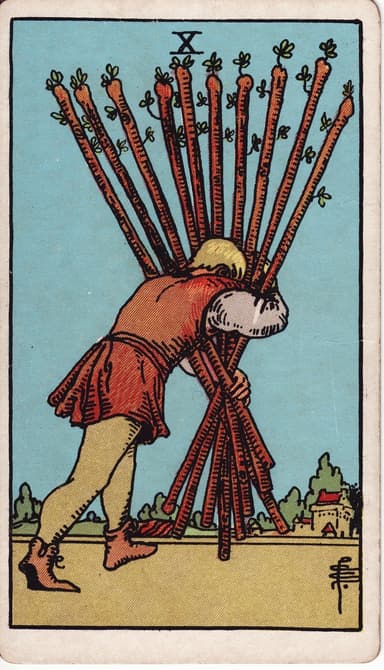
Position 1 — The situation
Ten of Wands
You are completely overwhelmed carrying a load too heavy for one person, because you took on every responsibility yourself to get it done right and now you are bowed under the weight, wondering how to take another step without dropping everything.
The first card names the situation plainly: the load is real, and no end to the load is in sight. Every card that follows is a cause of the load, a cost of the load, or a way the load can change.
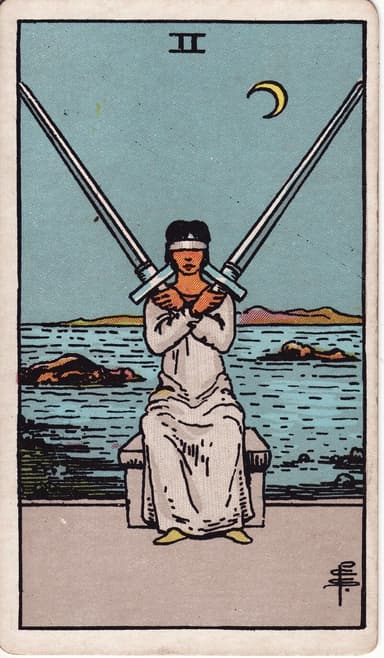
Position 2 — The challenge
Two of Swords
A gray, tired mood is clouding your judgment and keeping you standing between two choices, afraid to step either way because each path looks just as complicated as the other.
Across the situation sits the decision she keeps not making — the conversation about sharing the work. The challenge is not a villain and not a crisis. The challenge is a postponed conversation, and the postponement has a price of its own.
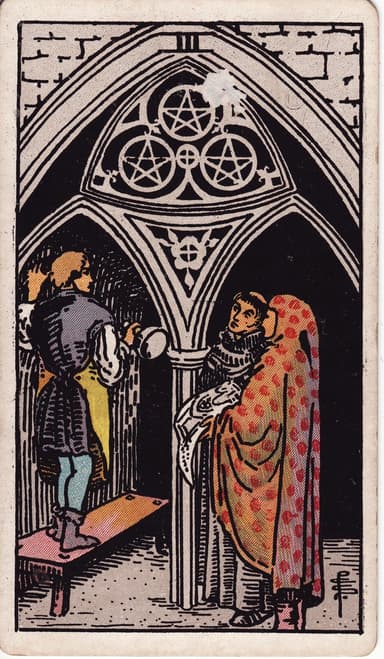
Position 3 — The foundation
Three of Pentacles
Your ground comes from solid groundwork laid through practice and teamwork, a quiet competence you have built over time, and a reliable network of people who have your back when life gets complicated.
Under the load sits the reason she was handed so much work in the first place. She put in the hours, she built real skill, and the people around her learned that work given to her gets done well.
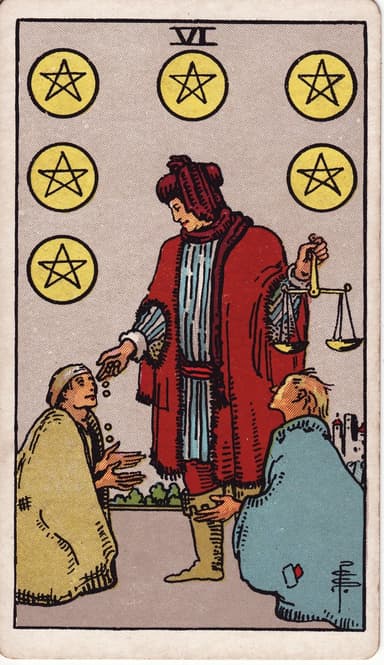
Position 4 — The recent past
Six of Pentacles
You spent a lot of energy trying to balance the scales in your relationships and responsibilities, giving your time, resources, or emotional support generously, and because it was not quite matched or returned in a way you could sustain, it quietly led toward the burnout you feel.
Not long ago, help moved between her and someone else — time, money, a hand with a hard job — and the help mattered more than the size of the help. Giving and receiving already belongs in her life; asking for help would not be new for her.
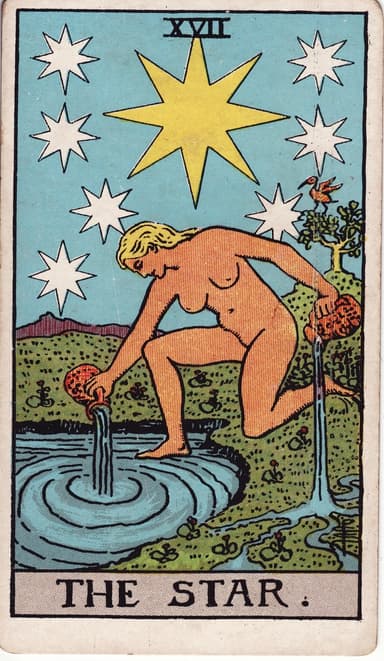
Position 5 — The crown
The Star
In your highest hopes, you are reaching for healing and renewal guided by hope, because deep down you have not lost your hope or your belief that a guiding light remains.
What she is reaching for is smaller and kinder than a rescue. She wants renewal: sleep that restores her, hope she can feel again, a slower pace she can trust.
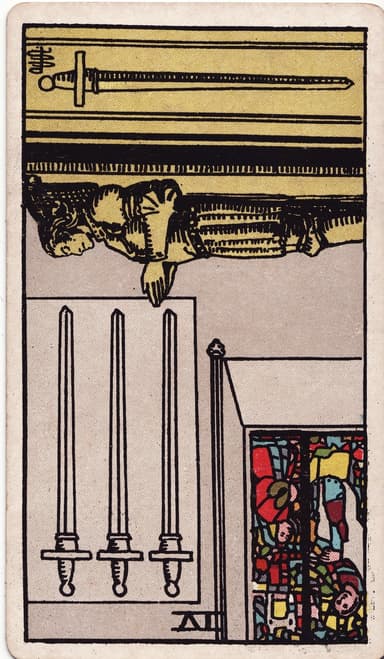
Position 6 — The near future
Four of Swords (reversed)
You feel ready to break out of enforced rest and step back into the flow, groggy and restless from waking too early, though you might need a minute to shake off the stiffness first.
This is the one reversed card in the spread, and the art shows the card upside down. Upright, the Four of Swords is rest — a pause that heals. Reversed in the near future, rest keeps getting postponed, and the card names the cost of postponing rest too long.
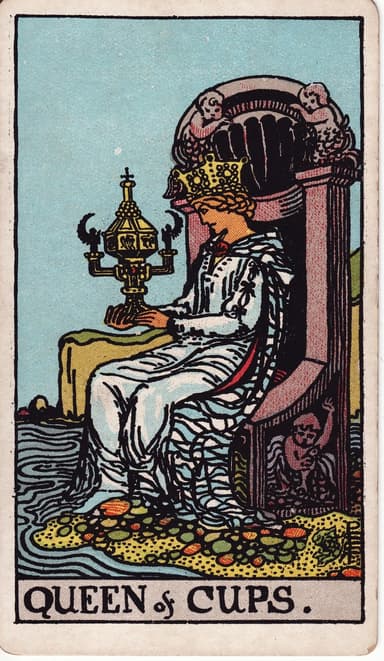
Position 7 — The self
Queen of Cups
You are leading with deep empathy, emotional maturity, and profound intuition, you feel deeply without drowning in those feelings, and you are holding space for your own heart.
This is how she is showing up: warm, emotionally honest, tuned in to the people around her. The self card also names part of the problem — she feels what other people need, so she says yes before anyone has to ask her.
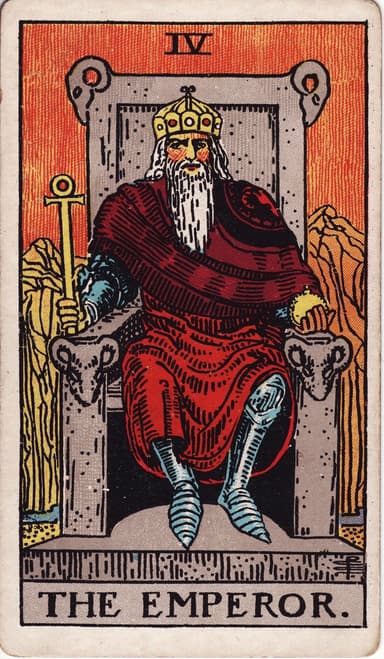
Position 8 — The environment
The Emperor
Around you a structured, sometimes rigid setup holds daily life together, with strict rules and deadlines that feel stiff yet keep the bills paid and the office running on time.
Around her, people are looking for someone solid they can trust, and they keep landing on her. The environment is not working against her. The environment is a workplace that leans on its most reliable person — and the leaning has quietly become the system.
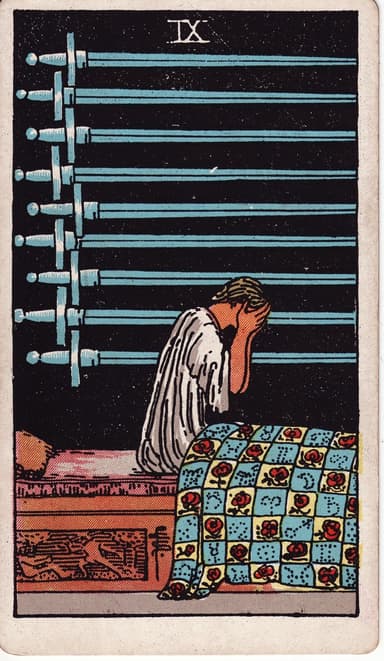
Position 9 — Hopes or fears
Nine of Swords
Deep down you wrestle with the fear that you are messing up or that the worries keeping you awake are entirely your fault, convinced everything is about to unravel even in a safe house.
This is the 3 a.m. position — the worry that visits at night. The card holds her hope and her fear side by side, and then offers the plainest explanation of the three: she may simply be exhausted.
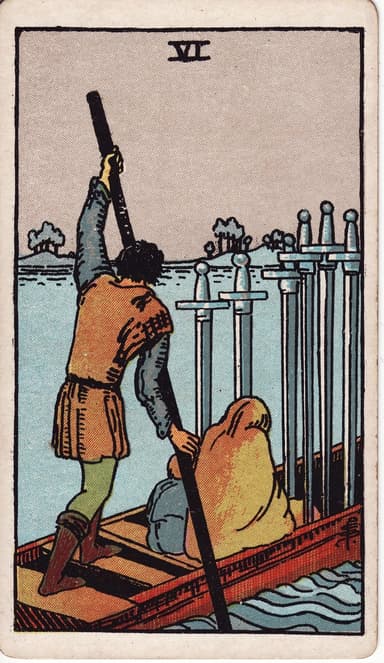
Position 10 — The outcome
Six of Swords
You move gradually and quietly away from the noise, the heavy baggage, and the constant friction toward quieter waters and a simpler space where you can catch your breath and let your shoulders drop, and if you feel like it, you have total permission to just close your laptop or step away from your to-do list for ten minutes today, make a cup of tea, and sit by a window without trying to solve a single problem.
The outcome card pictures a boat crossing from rough water toward a calmer shore. In plain terms: the situation ends with her getting somewhere quieter. Not quitting, not collapse — a crossing, made by the choices the rest of the spread has been naming.
Now read the ten cards as one story. A skilled woman (the foundation) whom everyone around her trusts (the environment) has taken on more than one person can carry (the situation), and the decision that would lighten the load keeps getting put off (the challenge). Help has passed between her and the people around her before (the recent past), and what she wants most is rest that actually restores her (the crown). She shows up kind and emotionally honest through all of it (the self), she lies awake worrying about what the tiredness means (hopes or fears), and rest keeps getting postponed until postponing rest becomes the danger itself (the near future). The outcome says the story can still end in calmer days — and the spread names the choices that lead there: make the decision, share the load, and stop before something forces her to stop.
Bring one situation.
Think of the situation you keep turning over — the decision, the change, the relationship — and draw the Celtic Cross. The reading walks you through all ten positions in order, closes with the overall story of your spread, and saves every draw to your reading history. The full Celtic Cross is a Premium reading.